Built-In Refrigerator Repair: What to Know Before Replacing It
Compare repair with a complete replacement plan for Sub-Zero, Dacor and GE Monogram built-in refrigerators.
Why replacement deserves a closer look
A built-in refrigerator belongs to both the kitchen's working equipment and its fitted design. When cooling changes or a door stops sealing properly, replacing the appliance may seem like the straightforward answer. However, the purchase price of another refrigerator is only one part of that decision. Dimensions, cabinetry, door movement, installation access and the condition of the existing machine all matter. A useful diagnosis gives you a defined repair option to compare with a complete replacement plan, rather than comparing a guessed component price with an appliance advertised online.
This guide focuses on homeowner decisions involving Sub-Zero, Dacor and GE Monogram refrigerators in Orange County. The name on the door does not establish a common design or a universal repair procedure. Your exact model and installation determine which details are relevant. At Profe Fix, a diagnostic visit costs $95, waived with a completed repair, and the proposed repair price is discussed before you approve the work. The aim is to understand the actual fault and your practical options before committing to a substantial change in a fitted kitchen.
Identify what kind of installation you have
Homeowners often use built-in, integrated and counter-depth as interchangeable descriptions, although the installation details can differ. Instead of relying on one label, explain what you can see. Does the refrigerator have furniture panels, a visible metal front, trim around the opening or a grille above the doors? Is it one appliance or a separate refrigerator and freezer arrangement? Photographs of the overall installation can help communicate these details. You do not need to dismantle anything or determine the internal design before arranging a diagnostic appointment.
Provide the complete model number if its identification label is accessible. If you cannot locate it safely, explain that when booking. A photograph of the kitchen is helpful for access planning, but it does not replace model information or an assessment. Avoid pulling a fitted refrigerator out of its opening to search for a label or to show the technician its rear connections. Heavy appliances and fitted panels deserve deliberate handling. Tell the service team about access restrictions in advance so those conditions can be discussed rather than becoming a surprise on arrival.
Begin with the compartment and the timeline
Describe exactly which function changed. Is the refrigerator compartment warmer, is the freezer affected, or is the concern a door, ice maker or unusual noise? A refrigerator that otherwise maintains cooling but has a damaged freezer gasket presents a different complaint from one that has stopped cooling throughout. Record when the change began and whether it happens continuously or intermittently. Mention recent installation work, movement or power interruptions without declaring that any one event caused the problem. The sequence is useful even when the diagnosis remains unknown.
A setting on the display and a measured compartment temperature are different pieces of information. Explain which one you are reporting. Photograph an accessible warning or error message rather than relying on a remembered abbreviation. Note visible moisture, frost or a door that does not sit as expected, but leave the cause open for assessment. Do not repeatedly change controls in the hope of producing a clearer symptom. A simple record of the original problem helps the technician connect the complaint to the appliance's operation and distinguish it from changes introduced afterward.
Doors and seals can matter independently of major repairs
A fitted refrigerator can draw attention to its most expensive components, but not every concern should begin with a compressor discussion. If a door does not close normally or a seal appears visibly damaged, report that specific observation. Check only ordinary items that might physically interfere with closure, such as a protruding container, without forcing hinges or adjusting panels. The relationship between a seal, alignment and cooling should be assessed for the actual appliance. A visible concern can be useful evidence without proving the full cause of the temperature change.
Sub-Zero's guidance recommends professional service for its Classic door and drawer gasket replacement. That is a useful reminder that a seemingly simple seal is still model-specific work. In your estimate, ask what door or gasket condition was found and how the proposed repair addresses it. If panel fit or alignment is also involved, clarify whether that is part of the same scope. Avoid ordering a seal based only on the brand or door width. The appropriate part and the planned work should be established before the repair becomes a purchase of a component you cannot confidently identify.
Separate appliance diagnosis from cabinetry concerns
The refrigerator and the surrounding kitchen are connected physically, but responsibility for every fitted detail should not be assumed. Tell the provider if cabinet panels have shifted, if a recent renovation altered the opening or if doors now contact adjacent furniture. Ask whether the proposed visit can assess the appliance concern and what additional coordination might be needed. A repair recommendation should identify the work being offered rather than promising that appliance service includes all cabinetry changes or restoration of unrelated finishes.
Photographs are helpful when explaining narrow gaps, projecting handles or a restricted route into the kitchen. Keep their purpose practical: they help discuss access and visible conditions, not diagnose a hidden fault remotely. If a separate installer, cabinet professional or property manager may need to participate, establish who coordinates that work. These arrangements can affect scheduling and the comparison with replacement. A clear division of responsibility is more useful than discovering after approval that two estimates assumed somebody else would remove panels, prepare the opening or restore the surrounding installation.
Sub-Zero: keep the discussion specific to the model
Sub-Zero refrigerators should be discussed by their exact model and complaint rather than treated as one uniform product. The manufacturer's support resources distinguish product families and provide model-relevant care and service information. Consult the appropriate documentation for user controls and accessible maintenance. If you believe manufacturer coverage may apply, ask about its required service route before commissioning work you expect to be covered. This guide does not represent Profe Fix as Factory Certified Service or imply that independent service automatically meets manufacturer warranty requirements.
For a paid diagnostic appointment, describe the affected area and installation clearly. Mention separate columns, cabinet panels or a grille where relevant, without assuming that a detail visible in another kitchen applies to yours. Ask the technician to explain the recommended scope and any access requirements. The decision is then about your appliance's confirmed condition rather than the reputation or original purchase price of the brand. A premium refrigerator may justify careful comparison, but its badge does not by itself establish whether repair or replacement is the better option for your household.
Dacor: distinguish the complaint from the component
With a Dacor refrigerator, provide the model and operating history before discussing parts. If the concern is cooling, explain whether both compartments changed, whether there is a warning and when the change occurred. If the problem concerns a door or another function, describe that separately. Do not assume that every temperature issue involves the same electronics or refrigeration component. An assessment should connect the proposed repair with findings on the actual machine and clarify whether additional concerns are related or require their own evaluation.
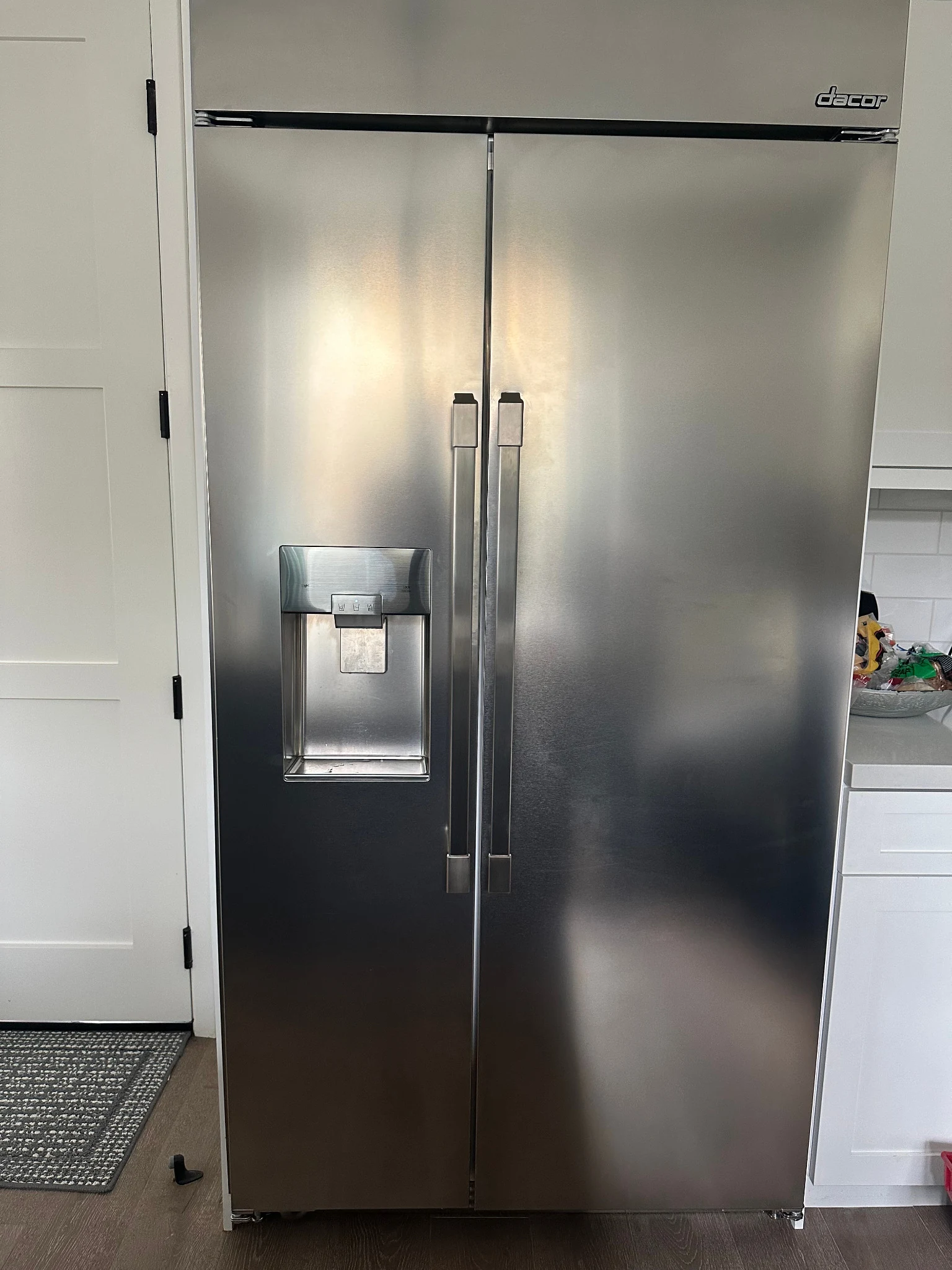
The site's work portfolio includes a Dacor refrigerator job described by the business as a compressor inverter replacement. That is a specific completed-work example, not a general diagnosis for other Dacor refrigerators. A photo from a job can illustrate the equipment involved while leaving another customer's repair decision open. If you request service after seeing that example, send your own model and symptoms rather than asking for the same component automatically. Matching the brand is not enough to establish that the appropriate part, scope or expected result will match as well.
GE Monogram: describe door concerns precisely
For a GE Monogram refrigerator or freezer, a useful request distinguishes cooling changes from visible door concerns. Tell us if the door seems difficult to close, the gasket appears damaged or moisture developed around a particular area. Explain whether the symptom is recent or longstanding and whether anything changed in the installation. Do not force the door, adjust fitted hardware or replace a seal simply because an online discussion describes a similar machine. Model-specific assessment helps keep a visible observation from becoming an unsupported component order.
One GE Monogram example supplied for this website involved a freezer door gasket problem. After the gasket was replaced, the temperature recovered. That is the business's reported outcome for that job; it does not promise that every Monogram cooling complaint will be resolved by a gasket. The relevant pattern is a specific concern followed by assessment and a repair addressing the findings. Your estimate should explain that same connection. If more than one issue is identified, ask which result each part of the proposed work is intended to achieve.
What a useful built-in repair estimate explains
A good comparison starts with a defined scope. Ask what fault was identified, what work is recommended, which parts are included and what access arrangements are assumed. Clarify whether a return appointment is expected and whether component availability has been confirmed. If the recommendation depends on further investigation, understand that limitation before treating the estimate as a final promise. A complete explanation should allow you to say what you are authorizing without repeating a list of component names you do not understand.
At Profe Fix, the $95 diagnostic fee is waived with a completed repair. Ask how the fee applies if you choose not to proceed and how it is reflected in the approved total. Do not mistake the diagnostic price for the cost of any possible built-in refrigerator repair. Equally, do not compare a retail part listing with a full service estimate as if they cover the same responsibilities. Keep the written scope and any changes you approve. This record helps distinguish the agreed repair from later recommendations and provides a useful reference for follow-up questions.
Compare replacement dimensions beyond the headline size
Before choosing replacement, check the actual installation requirements of a candidate model. A broadly similar width or capacity does not establish that it fits the existing opening, uses the same panels or opens comfortably beside nearby cabinets. Compare the manufacturer's installation information with the kitchen's dimensions and conditions. Include the route into the home and any limits imposed by stairs, corridors or doorways. Ask the installer to verify the plan rather than relying on a photograph that makes two refrigerators appear equivalent.
The comparison should include the work needed to complete replacement, not only the appliance purchase. Delivery, installation, removal and any necessary fitting changes can affect the overall decision. Obtain a scope for those tasks and identify who performs them. If the existing refrigerator has furniture panels you want to retain, ask explicitly whether that is possible with the proposed replacement. Do not assume it from a similar external appearance. A repair quote becomes easier to evaluate when the alternative is a verified installation plan rather than a sale price with unresolved practical details.
Weigh condition, timing and your household's priorities
Age is context, not a complete decision rule. Consider the confirmed fault, the appliance's broader condition, previous unresolved problems and whether the repair addresses what matters to you. Past spending should not force you to approve a new repair automatically. It can, however, help you ask about recurring symptoms and the condition of the machine as a whole. Discuss what is known and what remains uncertain. A responsible comparison does not guarantee the future lifespan of either a repaired appliance or a replacement based on a brief website description.
Timing deserves its own comparison. Ask when parts could be available and what remains before a repair appointment can be confirmed. Then compare that with the realistic delivery and installation schedule for a suitable replacement. A premium replacement may require planning that differs from buying an available freestanding unit. Your household may also have priorities concerning matching equipment, panel appearance or a planned renovation. Write those priorities down before making the decision. They explain why the best choice for one kitchen may not be the best choice for another with a similar repair estimate.
Plan a visit without moving the refrigerator yourself
Prepare by clearing ordinary belongings from the kitchen work area and explaining access conditions. Leave fitted trim, heavy doors, electrical connections and refrigeration components in place. If the refrigerator is difficult to reach or moving it might affect flooring or cabinets, raise that concern before the appointment. A photograph of the surrounding space is useful. The goal is an informed access plan, not an owner attempt to make a built-in appliance easier to diagnose by dismantling or moving it without appropriate preparation.
Arrange for an authorized decision maker to be available. In a rented home or managed property, establish who can approve costs, provide access and receive the findings. Keep the model information, symptom timeline and relevant purchase documents together. If you are investigating manufacturer coverage, mention that before approving paid work and confirm the required route directly with the manufacturer. These arrangements help the appointment progress from observation to a clear decision. They also prevent a technician and occupant from assuming different things about authorization, payment or the scope that the property owner expects.
Follow-up and warranty questions belong in the decision
Ask what operation will be checked after the repair and what instructions apply to returning the appliance to normal use. Restored cooling and the safety of food that previously warmed are separate matters. Follow appropriate food-safety guidance for that situation rather than relying on the repaired refrigerator to reverse earlier exposure. Keep the completed invoice and scope. Eligible Profe Fix repairs include a 90-day parts and labor warranty; confirm the terms applicable to your approved work rather than assuming that every future concern is part of the same repair.
If a symptom returns, report the affected compartment, when it changed and any visible warning. Explain how it relates to the original complaint and contact the provider with the repair record available. Do not treat every new sound as proof of failure or commission unrelated modifications before discussing a concern about completed work. A clear follow-up report helps distinguish the original issue from a new one. Good documentation is useful whether you keep the appliance for years, decide on a later replacement or need to coordinate service with a property manager.
A practical set of questions before choosing replacement
Can a built-in refrigerator be repaired without replacing the entire appliance? That depends on the diagnosed condition and proposed scope; assess it before making the comparison. Will another model fit the opening automatically? No assumption should replace verified dimensions and installation requirements. Does a premium brand mean repair is always the best choice? The actual fault, condition, cost and household priorities matter. These questions are useful because they expose decisions that cannot be answered by brand name, a single age guideline or an advertised component price.
When requesting built-in refrigerator repair in Orange County, send the brand, complete model when accessible, a short symptom timeline and photographs showing the installation. Mention doors, panels or access concerns separately from cooling symptoms. Ask for diagnosis, a defined repair recommendation and an explanation of the approved total. If replacement remains an option, compare that estimate with a complete installation plan. This approach gives you a practical choice: repairing a specific problem with understood terms, or replacing the appliance with the fitting, timing and costs properly accounted for.
Manufacturer resources
Sub-Zero Classic refrigeration support · Sub-Zero door gasket guidance