Refrigerator Not Cooling? What to Check Before Calling for Repair
Know what information to collect when your refrigerator feels warmer than usual.
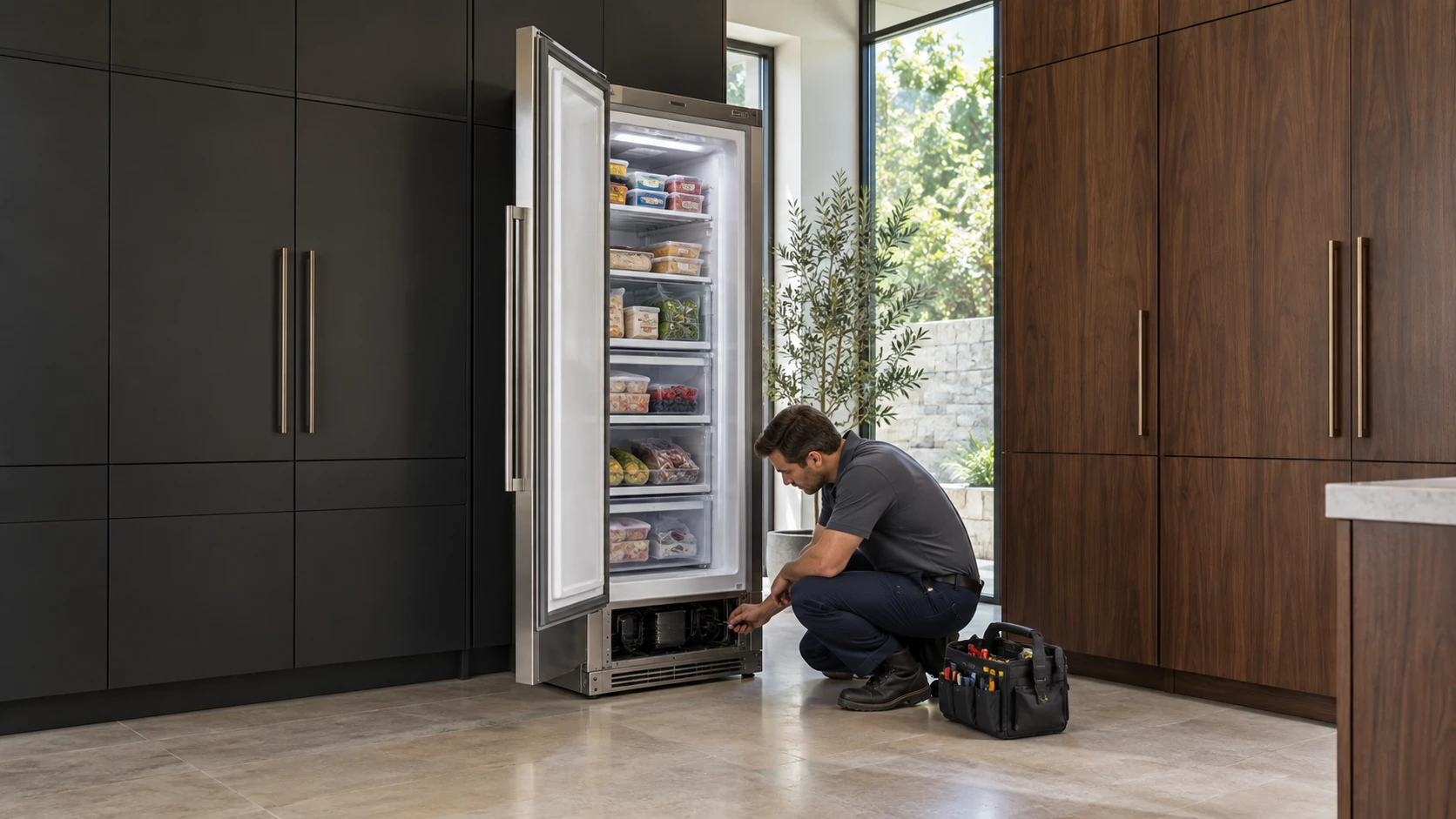
Describe the cooling change before guessing the cause
A refrigerator that feels warmer than usual can prompt an immediate search for a failed compressor. That is understandable, but the cooling complaint is not a diagnosis. The first useful step is to describe what changed: which compartment is affected, when the problem began, whether the machine still runs and what the display shows. These details help a technician approach the assessment with a clearer picture of the symptoms. They do not replace testing, but they are more useful than choosing a component from a general list of possible failures.
This guide focuses on observations and appointment preparation, not on opening electrical panels or repairing the sealed system yourself. Refrigerators differ by model, design and installation. Use your manufacturer's instructions for user controls and routine maintenance. If a fault remains unexplained, arrange a model-specific assessment. For Orange County homeowners, Profe Fix's diagnostic visit is $95, waived with a completed repair. The recommended work and repair price are discussed before you approve a repair.
Establish which compartment is affected
Start by distinguishing the refrigerator section from the freezer. Is one noticeably warmer, or has cooling changed in both? Describe what you observe rather than assuming that the compartments share every component or operate in the same way. Different refrigerator designs manage cooling differently. The fact that one section appears cold does not establish the condition of every fan, control or cooling component. It is simply an important part of the symptom pattern.
When contacting service, a sentence such as “the freezer still feels cold, but the fresh-food section has become warmer over two days” gives a useful starting point. Add whether ice production has changed and whether the display shows a warning. Avoid treating touch alone as an exact temperature measurement. If you already have an appropriate thermometer, record what it indicates along with the time and compartment. Keep food-handling decisions separate from the repair diagnosis and consult authoritative food-safety guidance when needed.
Settings and actual temperature are different information
The number displayed on a refrigerator can represent a selected setting rather than the measured temperature of the compartment. Check the instructions for your model to understand the display. Record the setting before changing anything. If the display is flashing or shows a code, photograph it. A technician can then distinguish the user's selected controls from the symptoms reported. This is especially helpful if someone else in the household adjusted the settings after noticing the problem.
Avoid changing several controls repeatedly in an attempt to force an immediate result. You can make the original pattern harder to describe, and the response may depend on model-specific operating behavior. Use only the instructions that apply to your appliance. A guide for a superficially similar refrigerator may describe controls your machine does not have. GE's owner support, for example, provides model-oriented troubleshooting resources; the relevant information is the resource for your equipment, not a universal sequence of button presses copied from an unrelated model.
Door closure is worth observing
Look for a door that is visibly not fully closed, an item interfering with closure or a gasket that appears damaged. These are accessible observations that can be reported without dismantling the appliance. Do not assume that every gap-looking area is the cause or that a gasket needs replacement solely because it is old. Describe where you see the condition and whether the door requires unusual pressure to close. A clear photo can help communicate the concern before the visit.
Also note whether the cooling change followed a period of frequent door opening, a move or a change in how the appliance is loaded. This history does not prove the cause, but it gives useful context. Integrated cabinet panels and adjacent drawers can affect what you can see, so mention the installation. Leave heavy doors and panels attached for assessment. A service request should describe the suspected closure issue without turning it into an unconfirmed instruction to replace a particular part.
Interior storage and airflow observations
Visible interior vents and the arrangement of stored items can be relevant to a cooling complaint. Consult the owner's instructions about loading and airflow for your model. If items are clearly covering an accessible vent, note that condition. Do not remove interior covers or reach into moving equipment to investigate. The distinction is between observing how the appliance is being used and attempting a technical repair. Keeping that boundary makes the information useful without creating a new problem.
A packed shelf and a failed component can produce different service findings even when both situations are described as poor cooling. Tell the technician whether the load changed recently and whether the complaint affects a specific area. Avoid declaring the entire cooling system defective from a single warm shelf. Similarly, moving one container does not establish that the underlying issue is resolved. If the symptom continues, use your observations as part of a structured assessment rather than as a substitute for diagnosis.
Sounds provide context, not a component verdict
A new clicking, buzzing or fan-like noise can be worth mentioning. Describe where it seems to come from and when it happens, but do not put your hands into inaccessible or moving areas to locate it. A brief recording made from outside the appliance may help explain an intermittent sound. The recording should accompany the model and cooling complaint rather than be treated as a definitive remote diagnosis. Sound alone cannot establish every electrical or mechanical condition.
Some refrigerator sounds occur during normal operation, and the relevant expectations depend on the design. Check the model instructions when uncertain. A noise that began at the same time as a temperature change deserves a clear description, while a familiar sound that has always occurred may be a separate observation. Explain the difference when booking. This helps the technician focus on the complaint you want addressed and avoids building the assessment around a dramatic but unrelated sound found in an online video.
Distinguish “running” from “working normally”
A light turning on or a display responding tells you something about the appliance, but it does not confirm that cooling is operating properly. Likewise, hearing activity does not establish that every cooling function is healthy. Describe exactly what you can observe: the interior light, display, sounds and compartment conditions. Avoid compressing these details into “it has power, so the compressor must be bad.” That conclusion goes beyond the evidence available to you.
The opposite description also benefits from precision. If the refrigerator seems entirely inactive, tell us which indicators are absent rather than assuming that a control board has failed. Recent changes to the installation or household power can be relevant history. Do not open an electrical connection or test energized components yourself. The service assessment can distinguish the appliance's operation from conditions around it. Your role is to explain the sequence clearly and make the equipment accessible for a safe, model-specific evaluation.
Record a recent move or installation change
A cooling complaint that follows delivery, relocation or kitchen work should include that history. Explain what changed and approximately when it occurred. Mention new cabinetry, a changed opening or work around the appliance. Installation specifications are model-specific, so do not apply a universal clearance number from another refrigerator. Keep the relevant manual or installation documents available if you have them. They can support a discussion about the setup without requiring you to dismantle it.
Do not assume that timing proves responsibility or cause. A symptom appearing after a move may be connected with the change, or it may reflect a separate fault. A measured description helps establish what needs checking. If another company performed the installation, retain their paperwork and describe the work accurately. The goal is not to assign blame before inspection. It is to give the technician enough context to evaluate the refrigerator and to help you understand any recommendation involving installation as well as the appliance.
Intermittent cooling deserves a short timeline
An appliance that works some days and seems warmer on others can be harder to describe than a complete shutdown. Make a short timeline of observations. Include the date, approximate time, affected compartment, display and any change in use. Note whether the issue follows a particular event, such as loading groceries or extended door opening, without declaring that event the cause. A few reliable observations are more useful than a long list of assumptions.
Intermittent faults may not present exactly the same way during the visit. Tell the technician what was happening when you noticed the problem and provide any photograph of a warning. Ask what can be established from the assessment and whether additional observation is required. A responsible answer can include uncertainty. It is better to understand the limits of the findings than to demand a particular replacement because the machine happened to seem normal at one moment and abnormal at another.
What frost and moisture can tell the conversation
If you notice unusual frost or moisture, describe its location and appearance. Is it on a door edge, around stored food or somewhere else you can see safely? Take a photo if accessible. Do not scrape concealed areas or remove covers to create a better picture. The location and accompanying cooling symptoms are useful information, but they do not automatically identify a defrost component, a seal or any other part as the failed item.
Explain whether the pattern is new and whether it followed a change in door closure or use. The technician can evaluate the observed condition in the context of the model and other findings. Online images can help you describe what you see, but they should not become a diagnosis by resemblance. Two photographs of frost may look similar while arising from different circumstances. Keep the report factual so the assessment begins with the appliance in your home rather than with a repair story belonging to someone else's machine.
Built-in models require access planning
An integrated refrigerator can be visually part of the cabinetry while still needing service access. Provide a photo of the installation and the model information if the label is safely reachable. Mention panels, trim, nearby doors and any restricted route into the kitchen. Do not attempt to pull out a heavy unit to make an inaccessible label visible. Ask the service team how to prepare for the particular installation when arranging the appointment.
Premium branding does not establish the diagnosis or the repair price. A built-in machine and a freestanding model should both be evaluated on their actual condition and requirements. If the proposed work involves access beyond ordinary appliance service, clarify the scope and who is responsible. These conversations help avoid surprises and support a realistic repair-versus-replacement comparison. They also keep the kitchen fitting from becoming an afterthought when the homeowner is understandably focused on restoring cooling.
Check manufacturer coverage by model
If the refrigerator may still be covered by a manufacturer's warranty or service plan, check the model, purchase records and applicable terms before approving paid work. Coverage can distinguish between components, labor and other costs. A claim about a brand's long warranty does not establish eligibility for your appliance. Use the manufacturer's support channel to confirm the required process and keep the response with your paperwork.
Do not assume that an independent service company is automatically an authorized provider for a covered claim. Ask the coverage provider how the appointment must be arranged and whether authorization is required in advance. This step can affect the financial decision, particularly when a major component is being considered. The Profe Fix diagnostic and repair terms are separate from manufacturer coverage. Knowing which arrangement applies helps you compare options without confusing a product warranty with a service warranty on completed work.
What a diagnostic visit should clarify
A useful assessment connects the observed cooling complaint with findings on the actual appliance. You can ask what was checked, what fault was identified and how the recommended work addresses the problem. There may be more than one relevant issue, so ask which recommendation is necessary for the reported complaint. You do not need to interpret every measurement yourself. You need a clear explanation of the scope you are being asked to approve.
Find out whether the required part is available or must be ordered, and how any follow-up visit will be arranged. Ask about the total repair price and applicable warranty. At Profe Fix, the $95 diagnostic fee is waived with a completed repair, and the recommended work is discussed before it proceeds. These terms do not turn the visit into a guarantee of immediate repair for every model. They provide a clear process for assessing the problem and deciding what to do next.
A practical service message and next steps
A concise request could read: “Our refrigerator has become warmer in the fresh-food section since Tuesday. The freezer seems unchanged. The display shows no code. The brand and model are in the attached label photo. It is a built-in unit in our Irvine kitchen.” This is an illustrative message, not a completed repair case. It shows how observations, history, model and access information can fit into a few sentences without naming an unconfirmed failed part.
For Profe Fix service in Orange County, include your address or ZIP code and the best contact details. Coverage, model suitability and scheduling are confirmed for the request. Keep a clear route to the appliance without moving or dismantling it yourself. The objective is to understand why cooling changed and review an appropriate repair plan. Careful observations help that conversation, while the diagnosis and your approval determine the work that follows.